



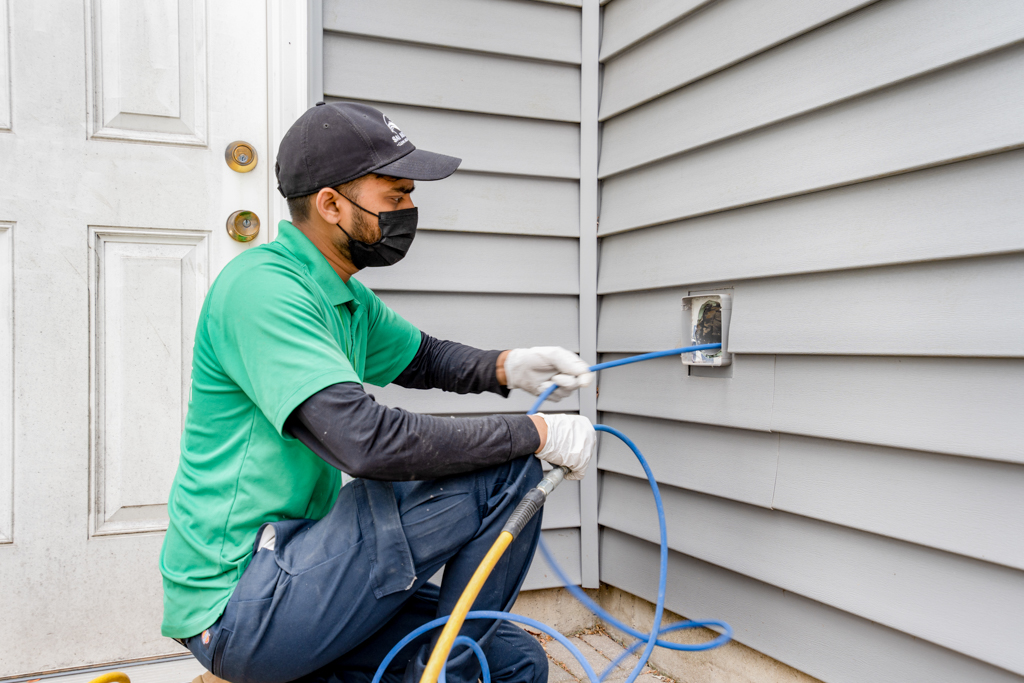
A dryer doesn’t really dry clothes with heat. It dries them by moving air. Heat loosens the moisture, but airflow carries it out of the house. When that air has to travel too far or turn too many corners on its way outside, the moisture stays behind in your towels.
We see this every week on the North Shore. Highland Park’s housing is some of the oldest in Lake County: census data puts the median home at 1963, and nearly one in four was built before 1940. Those homes were never designed for today’s laundry setups. Over decades of remodels, dryers have moved from basements to mudrooms to second-floor hallways, and each move made the vent longer.
SAI Air Duct has cleaned dryer vents in North Shore homes for more than 15 years. When a customer tells us their dryer “just isn’t what it used to be,” the vent route is usually where we find the answer. Call 224-256-0071.
Key Takeaways
- Drying speed depends on airflow, and every foot of vent and every elbow reduces it.
- Building codes generally cap dryer vents at 35 feet, and each elbow counts against that limit.
- Older Highland Park homes often have long vent routes created by laundry room moves during remodels.
- Roof-vented and second-floor dryers need cleaning more often than basement setups.
- Fall is the right time for dryer vent cleaning, before peak dryer fire season in winter.
Why Does Airflow Matter More Than Heat?
Airflow matters more than heat because a dryer can only dry as fast as it can push humid air out of the house. If the exhaust can’t escape, the drum fills with damp air, and turning up the heat just cooks the clothes in their own moisture.
Restricted airflow also makes the dryer work harder. The heating element or gas burner cycles more often, the high-limit safety switch can trip, and the cabinet runs hot. Over time, that wears out parts and shortens the dryer’s life.
How Do Length and Turns Slow a Dryer Down?
Length and turns slow a dryer down by adding friction that the blower has to overcome. A straight 10-foot run barely affects performance. Add three elbows and a vertical climb, and the same dryer can take twice as long.
That’s why the International Residential Code doesn’t just limit vent length. It generally caps the duct at 35 feet, then subtracts about 5 feet for each 90° elbow and 2.5 feet for each 45° elbow. A dryer manufacturer’s instructions can allow more or less. Either way, a 20-foot vent with four sharp elbows can behave like a 40-foot one.
What Vent Routes Do We See in Highland Park Homes?
Highland Park’s mix of historic homes, mid-century ranches, and newer builds produces a wide range of vent routes. Here’s what we commonly find, and what usually helps.
| Home type | Typical laundry location | Common vent route | Typical problem | What usually helps |
|---|---|---|---|---|
| Pre-1940 homes near downtown and the lake | Basement, or moved upstairs in a remodel | Long runs through old joist bays, sometimes to the roof | Excess length, hidden foil duct | Full cleaning, reroute to the nearest exterior wall |
| 1950s–60s ranches and split-levels | Basement or first-floor utility room | Short run out the rim joist | Crushed connector, clogged exterior hood | Cleaning, semi-rigid metal connector |
| Ravine and wooded lots | Lower level or walkout | Side-wall vent near landscaping | Leaves, nests and debris at the hood | Hood cleaning, guard-free dryer cap |
| Second-floor laundry additions | Upstairs hall or bedroom wing | Up through the attic and out the roof | Lint falling back down the vertical run | More frequent cleaning, roof cap rated for dryer exhaust |
| Condos and townhomes | Interior closet | Long horizontal run to a shared wall | Long length, hard-to-reach sections | Cleaning from both ends, airflow check |
How Can You Test Your Dryer Vent at Home?
You can run a quick check on your dryer vent in about two minutes:
- Run the dryer on high heat with an empty drum for a few minutes.
- Go outside to the vent hood and hold your hand a few inches from it.
- Feel for strong, warm airflow. A weak or barely warm stream suggests a restriction.
- Watch the flap. It should open fully while the dryer runs and close when it stops.
- Look for lint around the hood or on nearby siding and plants.
- Check behind the dryer for a crushed, kinked or disconnected connector.
If anything looks off, or the dryer still takes more than one cycle, it’s time for a professional cleaning and route check.
Why Do Roof Vents Need Extra Attention?
Roof vents need extra attention because gravity works against them. When the dryer shuts off, lint caught in the vertical section falls back toward the elbow at the bottom. Each cycle adds to the pile.
Roof caps are another weak spot. Some aren’t designed for dryer exhaust and include screens or tight louvers that trap lint, which code doesn’t allow at dryer terminations. In Highland Park winters, snow and ice can also block the cap. If your dryer vents through the roof, plan on dryer exhaust cleaning in Highland Park, IL at least once a year, and possibly more.
What Materials Should a Long Dryer Vent Use?
A long dryer vent should use smooth-wall metal duct, 4 inches in diameter, with as few joints as possible. The Consumer Product Safety Commission recommends replacing plastic or foil accordion ducting with rigid or semi-rigid metal, because it provides maximum airflow and resists crushing.
The flexible connector behind the dryer should be a listed product no longer than 8 feet, and it should never be hidden inside walls or ceilings. We still find vinyl and foil duct concealed in finished basements and older remodels.
How Often Do Highland Park Homes Need Dryer Duct Cleaning?
Most homes need dryer duct cleaning in Highland Park, IL about once a year. Long routes, roof vents, large families and pets usually call for more frequent service.
Seasonal timing matters. The U.S. Fire Administration has reported about 2,900 home clothes dryer fires a year, and failure to clean is the leading cause. Those fires peak in the winter months, when bulky clothing and bedding fill the dryer more often.
Why Choose SAI Air Duct for Dryer Vent Cleaning Services in Highland Park, IL?
For dryer vent cleaning services in Highland Park, IL, SAI Air Duct cleans the entire route from the dryer to the exterior, then tells you whether the route itself needs attention. We offer more than 15 years of experience, flat-rate pricing with no hidden fees, a BBB A+ rating, 24/7 availability and a 100% satisfaction guarantee.
“If your dryer has been slowing down, the vent route deserves a look. We’ll clean it end to end and show you what we find. Call SAI Air Duct at 224-256-0071.”
FAQs
1. How do I know if my dryer vent is too long?
Figure out how long the direct pipe runs from the dryer to the exterior, and then add another five feet per 90 degree bend and two and a half feet per 45 degree bend. Anything that exceeds 35 feet should be considered too long by the standard code maximum, unless the instructions for your particular dryer say otherwise. Long drying times, a warm laundry room, and poor air flow at the exterior vent cap are real-world indications that your vent path is restricting your dryer.
2. Can a vent be shortened without moving the dryer?
Usually, yes. You could take another route to the closest exterior wall, switch from sharp elbows to long radius bends, or relocate the roof vent from the roof to the exterior wall. However, in some cases, there may be listed booster fans as a choice when no short route is available.
3. Why does my second-floor dryer take longer than my old basement one?
The laundry on the second floor implies a longer vent with lots of turns, which might run up through the attic into a roof cap vent. This configuration causes additional friction and allows lint accumulation in the bottom of vertical segments. However, cleaning helps, and changing the direction of the vent or using different fittings does wonders for improving its efficiency.
4. Does dryer vent cleaning in Highland Park, IL include the outside vent?
It should. A complete cleaning covers the connector behind the dryer, every hidden section of duct and the exterior hood or roof cap. Many clogs sit right at the termination, where flaps stick or debris builds up. Ask any provider to confirm they clean the full route and check the hood.
5. Can a blocked dryer vent affect my gas dryer’s safety?
Yes. A gas dryer sends combustion byproducts out through the same vent as the moist air. A blocked or disconnected vent can push those gases back toward the laundry area, and a carbon monoxide alarm nearby is a smart safeguard. Keeping the vent clean and fully connected protects both airflow and indoor air.