



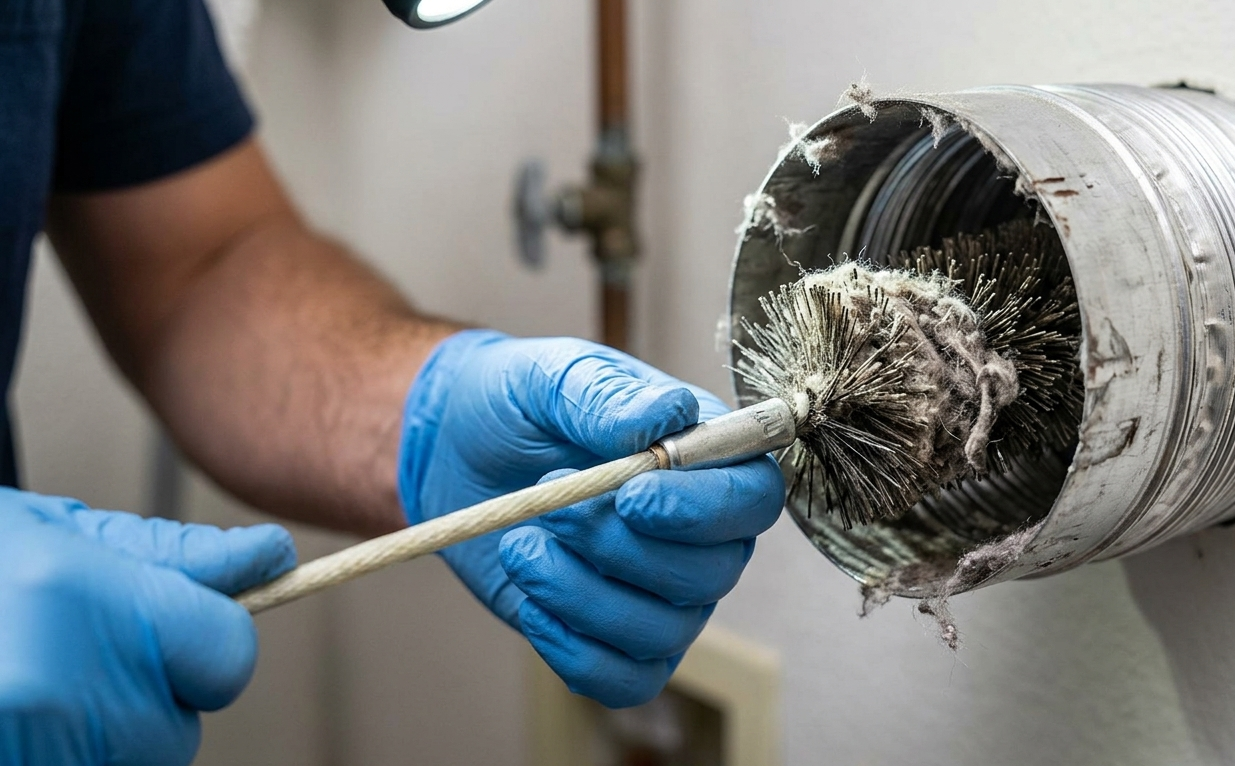
Waiting through multiple drying cycles for a single load of damp laundry can quickly turn routine household chores into a frustrating ordeal. Booking a professional Dryer Vent Cleaning in Glenview, IL, ensures your appliance exhaust duct is free from heavy lint blockages before excessive heat damages your clothes. When wet laundry tumbles inside the drum, moisture vapor and fine fabric fibers need a clear pathway to vent outdoors. Long duct runs, rigid elbows, and exterior hoods gather thick layers of damp fuzz over several months of heavy use. As this internal buildup grows thicker, hot humid air becomes trapped inside the appliance housing instead of escaping outside. Ignoring these warning signs forces internal heating elements to run constantly, inflating utility bills and straining mechanical components. Understanding how ventilation blockages develop gives local homeowners total control over laundry efficiency and household safety.
1. Excessive Lint Accumulation Inside Long Exhaust Ducts
Every laundry load sheds tiny fabric fibers that pass through the lint screen and settle along internal duct walls. Over several months, this sticky debris combines with moist air to form dense blockages along turns and roof exits. Investing time in clearing clogged dryer vent obstructions lets trapped heat and water vapor escape freely from your laundry room. When air cannot move through the ventilation pipe, moisture stays inside the drum, leaving clothes damp after a full cycle. Clearing these deep blockages restores proper exhaust velocity and keeps your appliance running efficiently.
2. Crushed Flexible Transition Hoses Behind the Machine
The flexible duct connecting your laundry machine to the wall pipe is extremely easy to pinch or crush when pushing appliances back. Thin foil or plastic accordion hoses can collapse easily, creating tight airflow restrictions right at the exhaust exit point. Calling an experienced lint removal service in Glenview, IL, replaces damaged transition hoses with code-compliant semi-rigid aluminum ducting. Kinked hoses trap damp lint near the machine, forcing moist air back into the dryer cabinet during operation. Installing sturdy metal transitions keeps ductwork wide open so heat and moisture exhaust without backpressure.
3. Stuck Exterior Vent Flappers and Damaged Wall Caps
Where your exhaust duct meets the outdoors, a plastic or metal hood features a movable flap designed to keep pests and cold air out. Outdoor weather, bird nests, and damp lint buildup often cause these exterior flaps to stick shut or open only partially. Focusing on improving dryer airflow and efficiency requires checking that outdoor wall terminals open freely under normal exhaust pressure. A jammed exterior hood acts like a closed door, forcing hot moisture back into your home vent line. Clearing debris from exterior wall caps ensures damp air vents completely outside every time your machine runs.
4. Heavy Moisture Trapped in Uninsulated Attic Vent Runs
When warm exhaust air travels through unheated attic spaces or cold crawlspaces during chilly North Shore winters, condensation forms rapidly inside metal pipes. Moisture drops cling to duct walls, creating a sticky surface where loose lint clings and builds up rapidly over time. Taking proactive steps toward reducing dryer vent fire hazards prevents dry lint from igniting near hot heating coils inside restricted ductwork. Water pooled inside sagging duct sections also creates heavy blockages that restrict exhaust airflow completely. Insulating exposed vent pipes keeps air warm so moisture exhausts outside without condensing inside your home.
5. Overloaded Laundry Drums and Clogged Mesh Lint Screens
Sometimes the primary cause of long drying cycles starts right inside the laundry drum before air even enters the ductwork. Packing too many heavy towels or blankets into a single load prevents hot air from tumbling through wet fabric layers. A dirty mesh lint filter covered in fabric softener film also chokes off air before it enters the exhaust hose. Washing your lint screen with warm soapy water removes invisible film that restricts drum ventilation. Balancing load sizes and maintaining clean screens keeps air moving freely through your entire exhaust system.
Conclusion
Discovering why your dryer takes hours to finish a load is essential for protecting your appliance and your home. Whether your ventilation issues stem from crushed hoses, stuck outdoor flappers, long duct runs, or heavy lint buildup, addressing restrictions early saves money. Clearing blocked exhaust lines restores fast drying cycles while lowering monthly utility costs across every season. Never ignore hot laundry cabinets, damp drum interiors, or faint burning odors during routine laundry days. Proactive care of your ventilation path ensures safe, dependable appliance performance for years to come.
“Call our team at SAI Air Duct at 224-256-0071 for fast, expert dryer vent help in Glenview, IL! We restore proper airflow fast!”
FAQs
1. Why does my dryer take two cycles to dry clothes in Glenview, IL?
Dryers in Glenview, IL, usually take multiple cycles when lint blockages or crushed transition hoses restrict exhaust airflow. Trapped moist air stays inside the drum instead of venting outdoors, leaving clothes damp even after high heat cycles.
2. How often should dryer vents be cleaned in Glenview, IL?
Dryer vents in Glenview, IL, should be cleaned at least once a year under normal family usage. Homes with large families, long duct runs, or pets may require service every six months to maintain optimal airflow and prevent safety hazards.
3. How much does dryer vent cleaning cost in Glenview, IL?
The cost for dryer vent cleaning in Glenview, IL, typically ranges based on vent length, access points, and buildup severity. Local technicians inspect your entire ventilation path first to provide clear, upfront pricing before beginning work.