


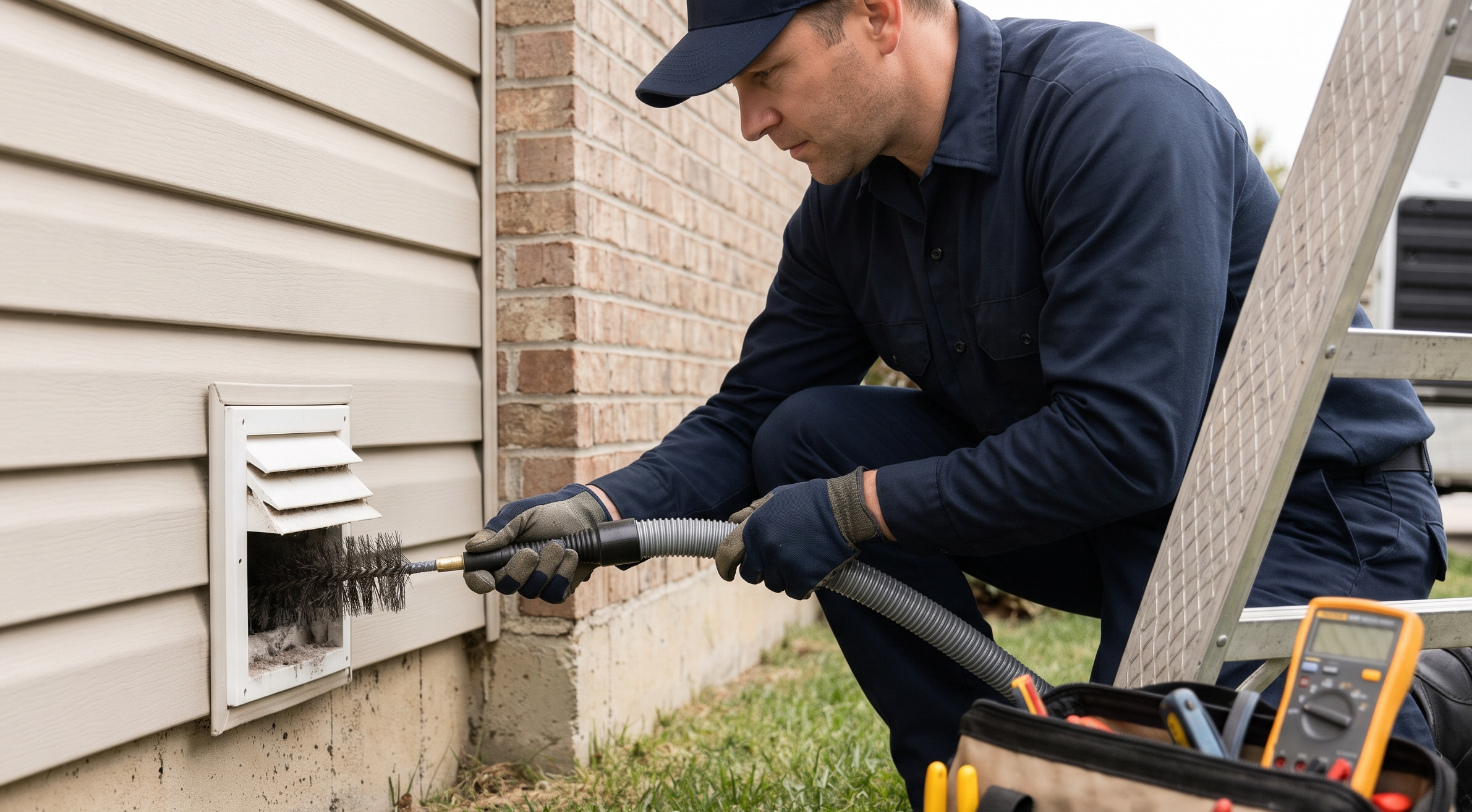
If your clothes start needing an extra cycle to dry once winter sets in, a snow-blocked vent hood outside could be the reason. Snow can pile up around a low hood, and its damper has to open every time the dryer runs.
When warm, damp air can’t escape, lint and moisture stay in the duct, and lint in a dryer vent poses a fire risk. A few checks after each snowfall, plus a yearly cleaning, are the core of dryer vent maintenance in Downers Grove, IL. Below, you’ll find the checks to make at the outside vent, how cold weather causes moisture in the duct, what a yearly inspection covers, and when to book service.
Key Highlights
- The National Weather Service’s 1991–2020 normals for Chicago O’Hare show 38.4 inches of snow a year, with January the snowiest month at 11.3 inches.
- A dryer vent hood should point down and be at least 12 inches above the ground.
- A louvered damper at the outside hood works better than a single hinged flap.
- In cold climates, insulate any dryer duct in an unheated space to prevent condensation, and have a professional clean the duct at least once a year.
What Should You Check at the Outside Vent in Winter?
Check that the hood is clear of snow and that its damper opens when the dryer runs. The National Weather Service 1991–2020 normals for Chicago O’Hare list 38.4 inches of snow a year, with 11.3 inches in January alone, so these checks come up often in a Chicago-area winter.
Keep Snow Away From the Hood
The Building America Solution Center, a U.S. Department of Energy resource, says the hood should point down and be at least 12 inches above the ground. After a snowfall, clear the snow from around the hood, and check it again after you shovel nearby. If your hood is lower than 12 inches, ask a technician about raising it.
Make Sure the Damper Opens
Run the dryer and look at the hood from outside. The damper should open while the dryer runs and close when it stops. A louvered damper is more effective than a single hinged door, so ask about a louvered hood if yours has one flap.
Clear Lint and Nests From the Opening
Lint can collect on the hood, and nests from small animals or insects can block the opening. Clear both whenever you check the damper.
How Does Cold Weather Cause Moisture in a Dryer Vent?
Warm, damp exhaust can condense into water when it passes through a cold section of duct. Insulating ducts in unheated spaces prevents this, especially in cold climates. The run should also slope slightly downward so any water that forms can drain.
Training material from NADCA (the National Air Duct Cleaners Association) lists excess moisture among the problems a technician notes during an inspection. If you see water at the hood or around a duct joint, mention it when you book.
What Does a Yearly Dryer Vent Inspection Cover?
A yearly visit looks at the full vent run, and the technician cleans the duct during the same visit. The inspection also catches problems that a winter of snow and cold can cause.
A dryer vent inspection in Downers Grove, IL should include these checks:
- The transition hose. The technician detaches the short hose behind the dryer to inspect it and replaces any damaged section.
- Where the dryer vents. A visual check confirms the dryer vents straight outside.
- Gas dryer service. A professional should service a gas dryer regularly, so ask whether the visit covers the gas connection.
- Insulation and slope. Any duct in an unheated space needs insulation and a slight downward slope.
When Should You Book Dryer Vent Service in Downers Grove?
Book dryer vent service in Downers Grove once a year, and sooner if something changes during winter. Call at these times:
- Fall is here. A fall cleaning covers the yearly visit before snow starts piling up around the hood.
- The damper won’t open. If the flap stays shut after you’ve cleared snow and lint, the hood may need a repair or a replacement.
- Water appears at the hood or a joint. Moisture can mean a duct section needs insulation or a better slope.
- Loads take longer to dry. Longer drying times are a top sign your dryer vent needs cleaning, so book a visit if loads start taking longer.
Between visits, clean the lint filter before or after every load. Quick checks after each snowfall help you catch a stuck damper or a buried hood early.
“Is your dryer vent hood buried in snow or slow to open? SAI Air Duct has more than 15 years of experience, and military members get a discount on our services. Contact us or call 224-256-0071 to book a dryer vent inspection for your Downers Grove home.”
FAQs
1. Can snow block a dryer vent?
Yes. Snow piled against the hood can stop the damper from opening, and the Chicago area averages 38.4 inches of snow a year. Check the hood after every storm and clear the snow away from it.
2. Can a dryer vent freeze in winter?
It can, if moisture condenses in a section of duct that runs through a cold, unheated space. Insulating that section and sloping the run so water drains outside helps prevent it.
3. Should a dryer vent flap be open or closed?
It should open while the dryer runs and close when the dryer stops. The outside end of the duct needs a damper that closes, and a louvered damper works better than a single hinged flap.
4. How high should a dryer vent be off the ground?
At least 12 inches, with the hood opening pointing down. In a snowy area, a big storm can bury a hood near that minimum, so clear it after each snowfall.
5. Do I need a dryer vent inspection every year?
Yes. A yearly professional cleaning is the standard, and the technician inspects the run at the same visit. SAI Air Duct offers dryer vent inspections in Downers Grove, so contact us to schedule yours.
