



Here’s something most people figure out the hard way: a fireplace you love is a fireplace that needs cleaning. If you’ve been thinking about fireplace cleaning in Glenview, IL, odds are you already know the look: ash spilling over the grate, glass you can barely see through, that smoky smell still hanging around the next morning. Nothing’s wrong. The thing just got used a lot, all winter, and now it wants a little payback. And the part folks never expect is how much of this you can do yourself, maybe twenty minutes, a bucket, an old rag. The other part, the stuff up the chimney, that’s where it gets serious, and that’s where you stop guessing and start being careful. So let’s walk through both, the easy half and the safety half, so lighting a fire never comes with a knot in your stomach.
1. What’s Actually Piling Up In There
Light a fire, and it always leaves you a present, and it’s not just the soft grey ash you can see in the morning. The one to actually worry about is creosote. It’s that dark, tarry stuff that builds up the flue as smoke cools on its way out, and a thin coat is harmless, but let it stack up and harden over a season, and it burns, which is how most chimney fires get started. Ash isn’t innocent either, a deep-packed-down bed of it smothers the airflow your fire needs and can keep embers alive far longer than you’d guess, sometimes a full day after you’d swear it was out. So really, you’ve got two jobs sitting in front of you, loose ash near the floor and sticky creosote way up top, and once that clicks, the rest gets easy to follow.
2. When to Just Call Somebody, and the Price Tag
Some of this just isn’t a DIY job, and pretending otherwise is how people end up hurt. Anything up the flue, anything involving the top of the chimney, or creosote that’s gone hard and glassy, that belongs to a pro with real rods, real brushes, and a safe way onto the roof. The fireplace cleaning service cost for an average home usually runs in the low-to-mid hundreds, give or take, depending on how bad the buildup is, how awkward the access is, and whether they fold an inspection into the price. That number stings a little at first, right up until you remember you’re also paying someone to check the liner and the cap for cracks you’d never catch from down on your knees at the hearth. Once a year, it’s a small, boring expense, and it takes the scary half of the job clean off your hands.
3. The Part You Can Knock Out Yourself
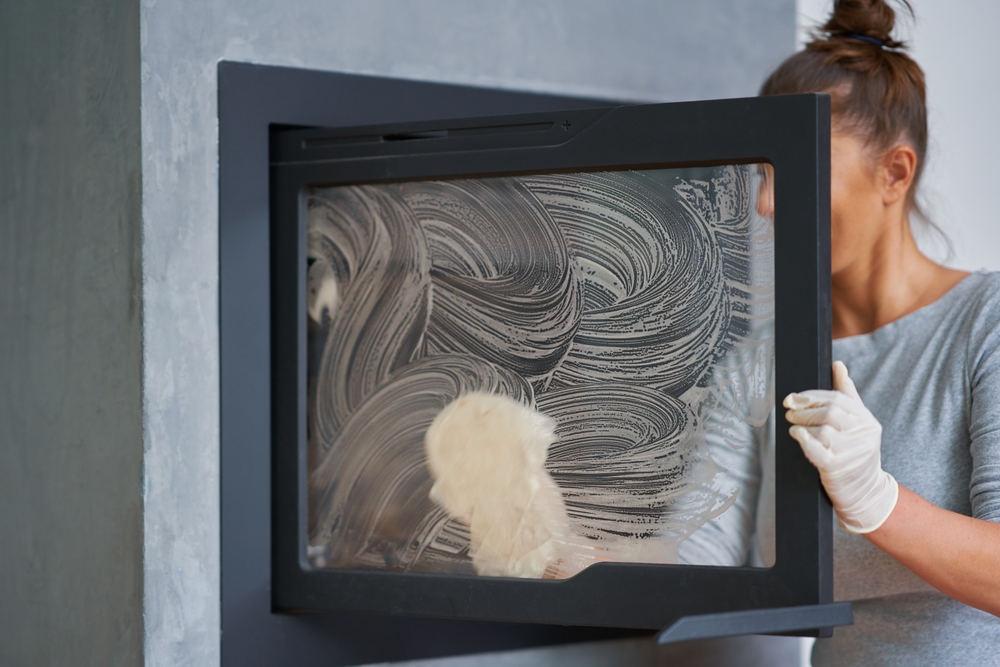
The day-to-day cleanup is easy, and honestly kind of satisfying once you’ve got a rhythm going. Wait until the ash is dead cold, give it a full day after the last fire, no shortcuts, then scoop it into a metal can with a lid, not a paper bag, not a plastic bucket, because a hidden ember will happily find either one. Leave maybe an inch of ash on the firebox floor if you like, it’s not laziness, that thin layer actually helps your next fire catch faster and hold its heat. For the foggy glass, skip the fancy sprays; a damp rag dipped in a pinch of that same fine ash cuts the haze better than anything off a shelf, an old trick that just refuses to quit working. A quick wipe of the surround, a sweep of the hearth, and you’re finished in about the time it takes to empty a dishwasher.
4. Burn It Right, and It Barely Gets Dirty
Half the battle isn’t cleaning at all; it’s how you run the thing in the first place. Of all the wood burning fireplace cleaning tips floating around out there, the one that matters most is also the dullest: burn dry, seasoned hardwood, split and sitting for at least six months, a full year if you can swing it. Green or wet wood just sulks in the grate, smolders low, smokes like crazy, and coats your flue in fresh creosote faster than you’d believe. Build a hot, lively fire instead of a slow smoky one, and quit pinching the damper half shut to drag a single log through the whole evening; the fire needs air to breathe. Stick with that for a season and come spring you’ll honestly wonder why the firebox barely needs a scrub at all.
5. The Signs That Mean Stop Right Now
A few things should make you set the matches right back down and pick up the phone instead. A sharp, sour smell, smoke rolling back into the room, a fire that just won’t pull the way it should, all of that points to something gone wrong up the flue. Black flakes raining down into the firebox is creosote letting go from somewhere above, and a low rumble while a fire’s burning is the sound you never want to hear; that’s a chimney fire happening right then. Cracks creeping through the firebox brick, or mortar that crumbles away when you poke it, are quieter trouble, but they let heat reach wood and framing it was never meant to touch. None of this is a wait-and-see situation, and treating every single one of them like it’s urgent is exactly what keeps a small problem from turning into a bad night.
Conclusion
A wood-burning fireplace really isn’t hard to keep up; it just wants a steady little routine instead of one panicked scramble. Do the ash and the glass yourself, burn good dry wood season after season, and you’ve handled most of what keeps it clean and nice to sit in front of. Hand the flue and the top of the chimney over to a pro once a year, because that’s the part where a small mistake gets expensive in a hurry, or worse. Watch for the warning signs as well, and let any one of them stop you cold rather than tempting you to push it. Do that much, and the fireplace stays exactly what it’s meant to be, the warm middle of the room, not one more thing nagging at the back of your head.
“Want the fire without the worry? Give Sai Air Duct a ring at 224-256-0071, we’ll clean it, check it top to bottom, and leave it safe to light.”
FAQs
Q1: How often does a wood-burning fireplace need cleaning in Glenview, IL?
If you burn most weekends through a Glenview winter, get a real professional cleaning once a year, and fall is the smart time to book it. The light stuff, ash and glass, you’ll be handling yourself every week or two while the fireplace is in regular use.
Q2: Why is my fireplace glass black after just a couple of fires?
That’s almost always wet wood, or fires kept too low and lazy. Switch to properly dried hardwood and build hotter fires, and Glenview homeowners usually find the glass stays clear far longer with way less scrubbing.
Q3: Is it safe to use the fireplace right after cleaning it?
Yes, as long as everything’s dry and the ash can is stored somewhere safe, well away from the house. Just let freshly cleaned glass and any product dry fully first, otherwise you’ll get smoke streaks the second it heats up.